English Alphabet Tracing Guide for Preschoolers | VidyaFrame

Introduction: Why Alphabet Tracing is the Foundation of Early Writing
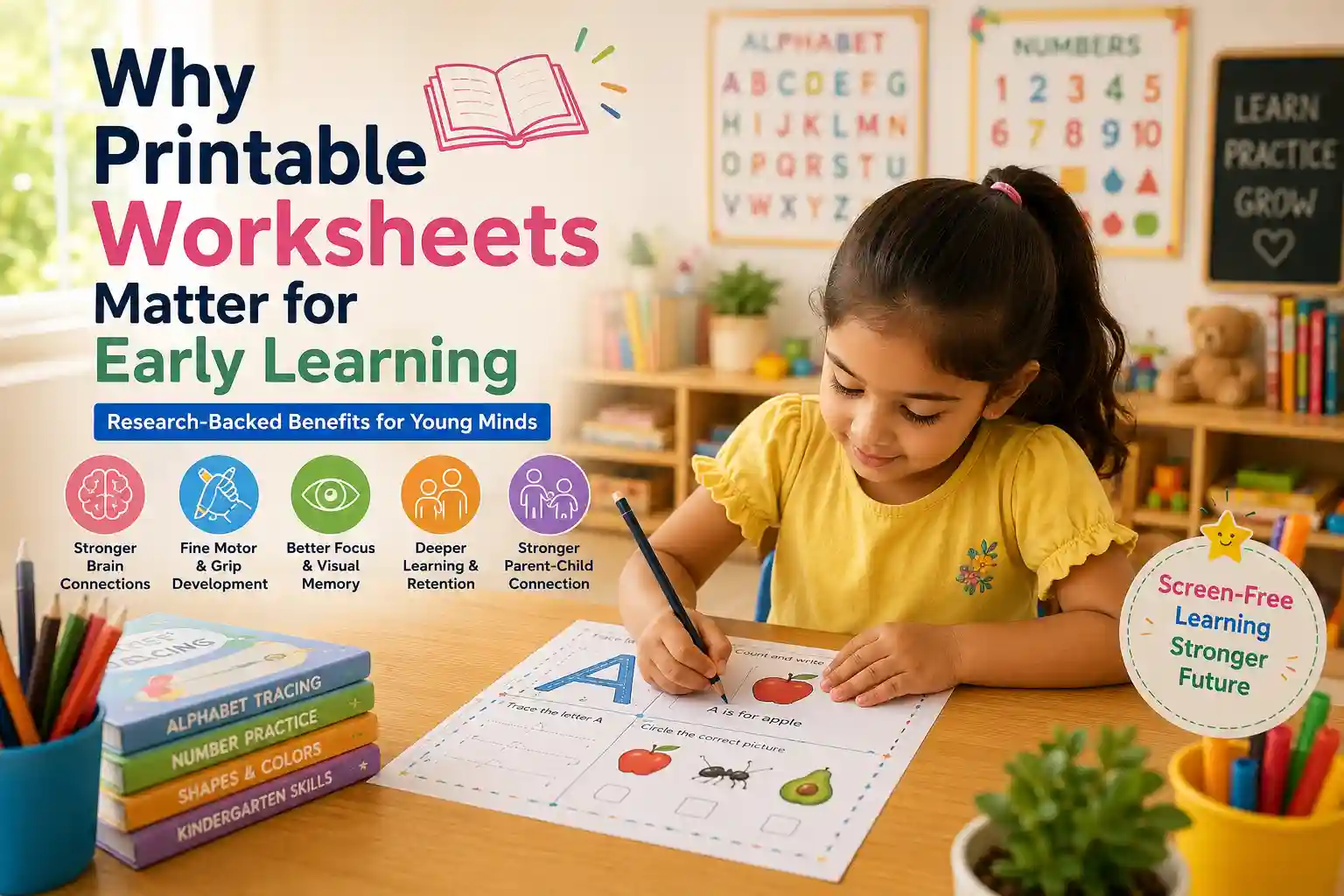
Teaching a preschooler to write the English alphabet is one of the most exciting milestones in early childhood education. But here's the truth most parents miss: jumping straight to freehand writing without proper tracing practice leads to poor handwriting habits that are nearly impossible to fix later.
Alphabet tracing is not just "practice" — it is the scientific bridge between letter recognition and independent handwriting. When a child traces letters, their brain and hand simultaneously learn the exact motor pathways needed to form each shape. This builds muscle memory, refines fine motor skills, and — most importantly — instills confidence in young learners.
At VidyaFrame, we believe that the right alphabet tracing worksheets combined with the right teaching technique can transform a frustrated preschooler into a confident early writer. This complete guide will walk you through every essential step.
Why Tracing Matters: The Science Behind Guided Practice
Before a child can write a letter freehand, their brain must map the specific movements required to form that shape. Tracing provides a guided pathway — think of it as "training wheels" for handwriting.
Without this guided practice, children often develop poor writing habits such as:
- Starting letters from the bottom instead of the top
- Using inefficient or reversed strokes
- Forming letters in incorrect stroke order
These habits become deeply ingrained muscle memory by age 6-7, making them extremely difficult to correct later in life. That's why starting with high-quality tracing worksheets is non-negotiable for preschool success.
Step 1: Establishing the Correct Pencil Grip
Before the pencil even touches the paper, focus on the grip. The ideal grip for preschoolers is the dynamic tripod grip, where the pencil rests on the middle finger and is pinched between the thumb and index finger.
The 'Pinch and Flip' Trick
Have the child pinch the pencil near the tip with their thumb and index finger while it's lying on the table pointing toward them. Then, flip the pencil back so it rests in the web of their hand.
Pro Tip for Parents: Start with thick crayons or beginner pencils. These are easier for small hands to grasp securely and reduce hand fatigue during short tracing sessions.
Step 2: The Optimal Letter Formation Order
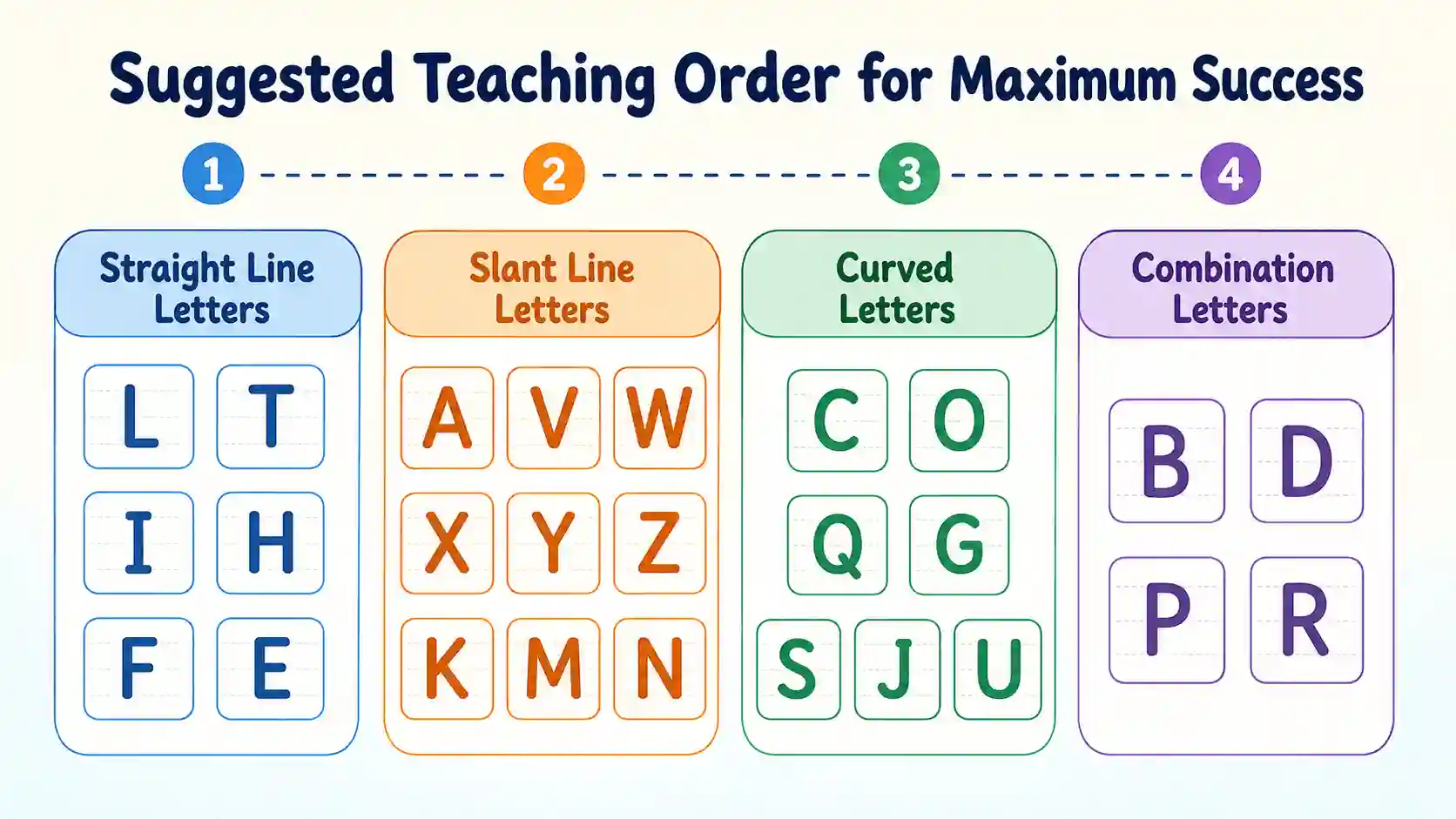
Do NOT teach A to Z in alphabetical order. Teaching letters in alphabetical order is not developmentally appropriate for handwriting. Instead, group letters by their stroke patterns — this is the method used by top early literacy programs worldwide.
Suggested Teaching Order for Maximum Success
| Group | Letters | Why This Order? |
|---|---|---|
| Straight Line Letters | L, T, I, H, F, E | Easiest — only vertical & horizontal strokes |
| Slant Line Letters | A, V, W, X, Y, Z, K, M, N | Builds on straight lines with angles |
| Curved Letters | C, O, Q, G, S, J, U | Introduces curves after lines are mastered |
| Combination Letters | B, D, P, R | Hardest — combine straight lines AND curves |
Mastering one group before moving to the next builds confidence and ensures foundational motor skills are firmly in place before tackling complex shapes.
Step 3: Using Tracing Worksheets Effectively
When selecting or creating alphabet tracing worksheets, follow these research-backed best practices:
- Start Big, Then Go Small: Begin with large letter tracing worksheets that utilize gross motor skills. As control improves, gradually move to smaller letters that demand fine motor precision. This progression is critical for proper letter formation.
- Directional Arrows Are Crucial: The best letter tracing worksheets include numbered directional arrows showing where to start each stroke, which direction to move, and the correct stroke order. Always emphasize top-to-bottom and left-to-right movements.
- Don't Overdo It: Preschoolers have short attention spans and their hand muscles tire quickly. Limit tracing practice to 10-15 minutes per day. Short, focused, daily practice is far more effective than one long, frustrating session per week.
Fun Tracing Activities Beyond the Worksheet
To keep learning engaging, mix traditional tracing worksheets with sensory tracing activities:
- Sand or Salt Trays: Pour a thin layer of sand or salt into a shallow tray. Have the child trace letters with their finger — this builds tactile memory alongside motor memory.
- Shaving Cream Writing: Spray shaving cream on a table or window. Let children practice large letter formations with their whole arm. This is excellent for kinesthetic learners.
- Air Writing: Have the child use their whole arm to write large letters in the air. This strengthens shoulder stability and reinforces correct stroke direction before picking up a pencil.
Choosing the Best Alphabet Tracing Worksheets: What to Look For
| Feature | Why It Matters |
|---|---|
| Directional arrows | Ensures correct stroke order from day one |
| Large-to-small progression | Matches developmental readiness |
| Both uppercase & lowercase | Prepares for real-world reading & writing |
| Beginning sound pictures | Connects tracing to phonics (e.g., "A is for Apple") |
| Independent writing space | Builds confidence toward freehand writing |
| Laminate-friendly design | Allows reusable practice with dry-erase markers |
Frequently Asked Questions (FAQ)
Q: At what age should I start alphabet tracing with my child?
A: Most children are ready between ages 3 and 4. Look for signs of interest in drawing or scribbling. If your child can hold a crayon, they're ready for preschool tracing worksheets.
Q: How long should a tracing session last?
A: 10-15 minutes maximum. Preschoolers tire quickly. Daily short sessions beat weekly marathon sessions.
Q: Should I start with uppercase or lowercase letters?
A: Start with uppercase letters first. They are generally easier to form and build foundational stroke control before introducing lowercase letters.
Q: Are free printable tracing worksheets effective?
A: Absolutely — if they include directional stroke arrows and proper size progression. At VidyaFrame, we offer research-aligned free printable alphabet tracing worksheets.
Conclusion: Setting Your Child Up for Writing Success
Alphabet tracing is far more than a preschool activity — it is a vital developmental phase that sets the stage for a lifetime of confident writing. By focusing on proper pencil grip, grouping letters by stroke type, using directional tracing worksheets, and keeping practice short, fun, and consistent, you make learning smooth and joyful.
Download Free Alphabet Tracing Worksheets
Give your child the best start in early writing with VidyaFrame's free printable worksheets and educational charts.

Written by Kanhaiya Lal
View Website & Portfolio →VidyaFrame Founder & Teacher
Educator & Founder of VidyaFrame. Designing interactive educational charts, worksheets, and learning resources for primary students, teachers, and parents.
Enhance your learning
Download beautifully designed worksheets and educational charts related to this topic for free.