
Teach Gender Nouns to Kids: Class 1–5 Guide | VidyaFrame

Teaching gender nouns for kids is one of the first big steps in building strong English grammar for Class 1 to 5 students. Once children learn to tell a masculine noun from a feminine noun, sentence-building, reading comprehension, and vocabulary all become easier. This guide walks you through simple explanations, classroom-tested activities, and home tips to help you how to teach gender nouns — specifically masculine and feminine nouns — in a way kids actually enjoy.
What Are Masculine and Feminine Nouns?
Before jumping into activities, make sure children understand the basic idea. Explain that nouns name people, animals, places, or things — and that many nouns naming people or animals change depending on whether they are male (masculine) or female (feminine).
💡 Simple Definition for Kids: "Some words change when we talk about a boy or a girl, a man or a woman, or a male animal or a female animal. Those words are called gender nouns."
Easy Gender Noun Examples for Kids
Starting with familiar, everyday words makes gender nouns easier to remember. Here are simple pairs every child recognizes:
👨👩👧 Common People Gender Nouns
- Boy → Girl
- Father → Mother
- King → Queen
- Uncle → Aunt
- Brother → Sister
🦁 Common Animal Gender Nouns
- Lion → Lioness
- Rooster → Hen
- Bull → Cow
- Tiger → Tigress
Introduce these examples through stories or characters children already know — it turns an abstract grammar rule into something concrete and relatable.
Best Strategies to Teach Gender Nouns to Kids
1. Use a Gender Nouns Chart
A colorful, well-illustrated gender nouns chart for kids works as a passive learning tool that reinforces vocabulary all day long. Hang it in the classroom or study corner with clear "Masculine" and "Feminine" columns paired with pictures. Whenever a child forgets a word, the chart is right there to jog their memory.
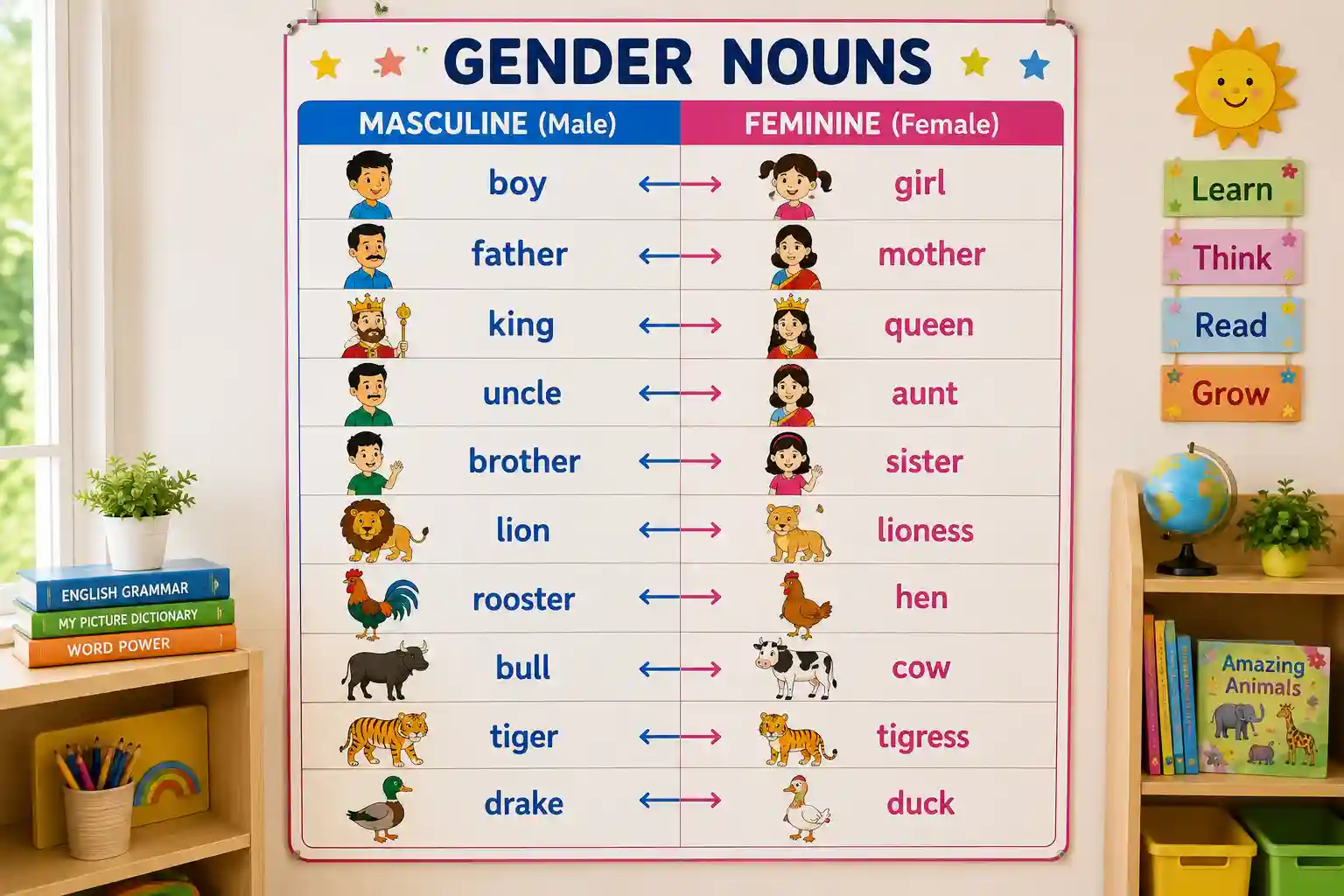
Visual gender nouns chart for kids showing paired masculine and feminine word columns.
2. Storytelling and Role-Play
Weave gender nouns into story time. Fairy tales with a King and Queen, or a Prince and Princess, are perfect for pausing and asking, "Is this character masculine or feminine?" Role-play takes it further — have each child introduce themselves using a gender noun, like "I am a brother" or "I am a lioness," to build confident, natural usage.
Fun Gender Noun Classroom Activities
Hands-on gender noun activities for kids help move the concept from memory to muscle memory.
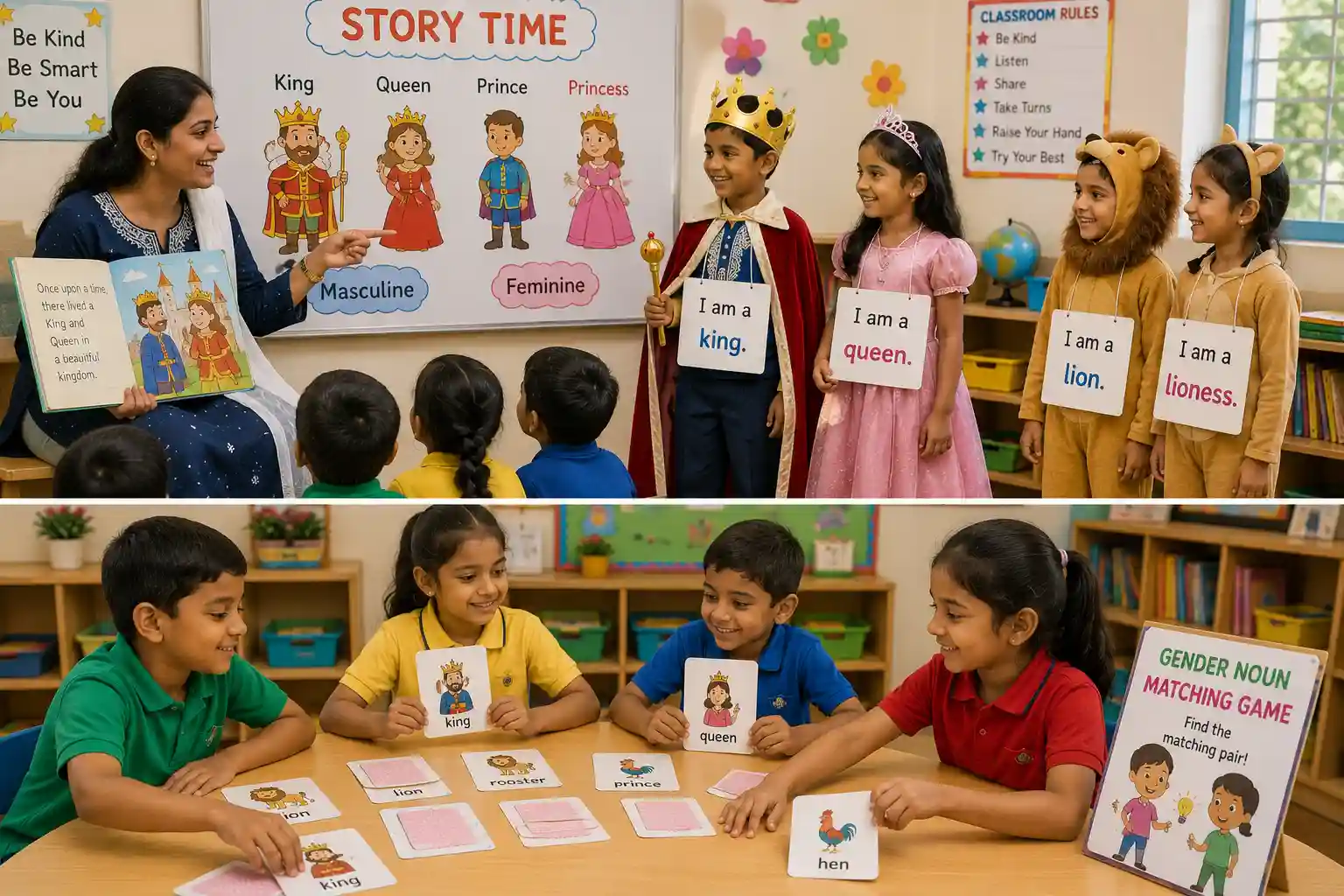
Primary school children playing an interactive gender noun matching game in the classroom.
Gender Noun Matching Game
Create two sets of flashcards — masculine nouns on one, feminine on the other. Shuffle and ask children to find matching pairs. For a livelier version, split the class in half, hand out cards, and let students find their "partner" word.
Fill-in-the-Blanks Worksheets
Using gender nouns worksheets for kids is one of the best ways to check understanding while practicing reading. For example: "The (king) and the _____ ruled the kingdom." This builds both vocabulary recall and sentence comprehension.
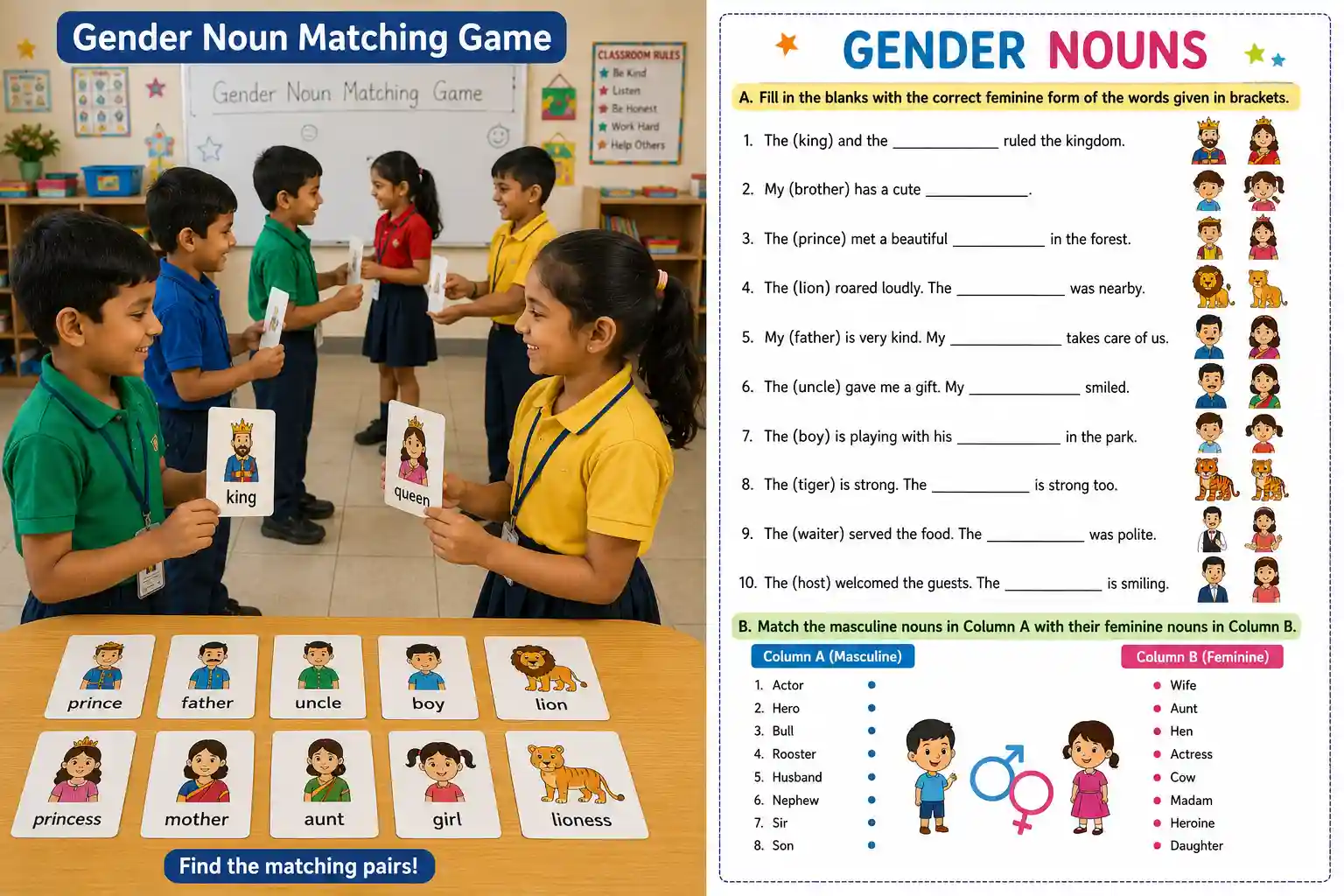
Printable masculine and feminine nouns worksheet for Class 1 to 5 students.
Masculine Feminine Sorting Baskets
Label two baskets "Masculine" and "Feminine." Give children a mix of word or picture cards to sort into the right basket. This tactile activity works especially well for younger learners in Class 1 and 2.
How Parents Can Reinforce Gender Nouns at Home
Learning shouldn't stop at the classroom door. Parents can casually point out gender nouns while reading bedtime stories, or use family gatherings as a natural opportunity to talk about relations like uncle/aunt or nephew/niece. The goal is to make it part of everyday conversation rather than a formal lesson.
Frequently Asked Questions
Q: What age should kids start learning gender nouns?
A: Most schools introduce gender nouns from Class 1, around age 5–6, once children are comfortable with basic nouns.
Q: What is the easiest way to teach gender nouns to kids?
A: Start with familiar people and animal pairs (boy/girl, lion/lioness), then reinforce with a gender nouns chart for kids, matching games, and worksheets.
Q: Are there common nouns that don't change by gender?
A: Yes — words like "teacher," "doctor," and "friend" stay the same for both males and females and are called common gender nouns. This is a useful next topic once masculine and feminine pairs are mastered.
Conclusion
Mastering masculine and feminine nouns is a stepping stone to confident English grammar. By combining visual charts, interactive games, and consistent practice at home, children pick up gender nouns naturally and enjoyably.
Ready to Bring This Into Your Classroom or Home?
Explore VidyaFrame's full library of grammar resources, and download our printable gender nouns chart for kids to give your students the visual support they need to succeed.

Written by Kanhaiya Lal
View Website & Portfolio →VidyaFrame Founder & Teacher
Educator & Founder of VidyaFrame. Designing interactive educational charts, worksheets, and learning resources for primary students, teachers, and parents.
Enhance your learning
Download beautifully designed worksheets and educational charts related to this topic for free.